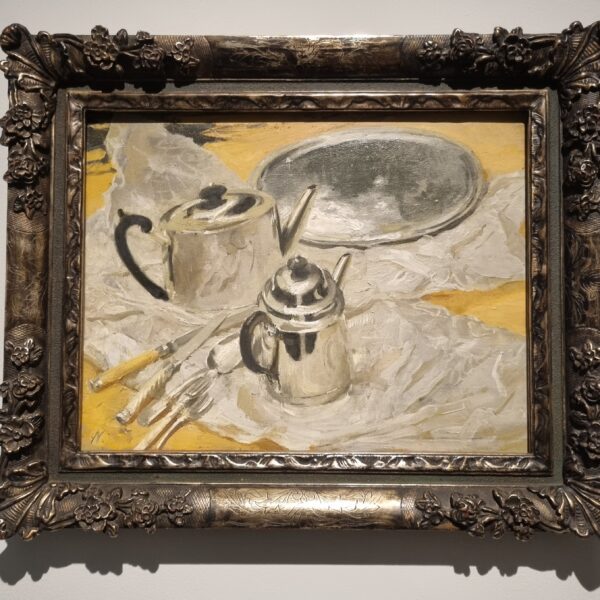
Pallant House Gallery’s William Nicholson exhibition, curated by Miriam O’Connor Perks, is the first major show in over 20 years dedicated to one of Britain’s most respected and versatile early 20th century artists.
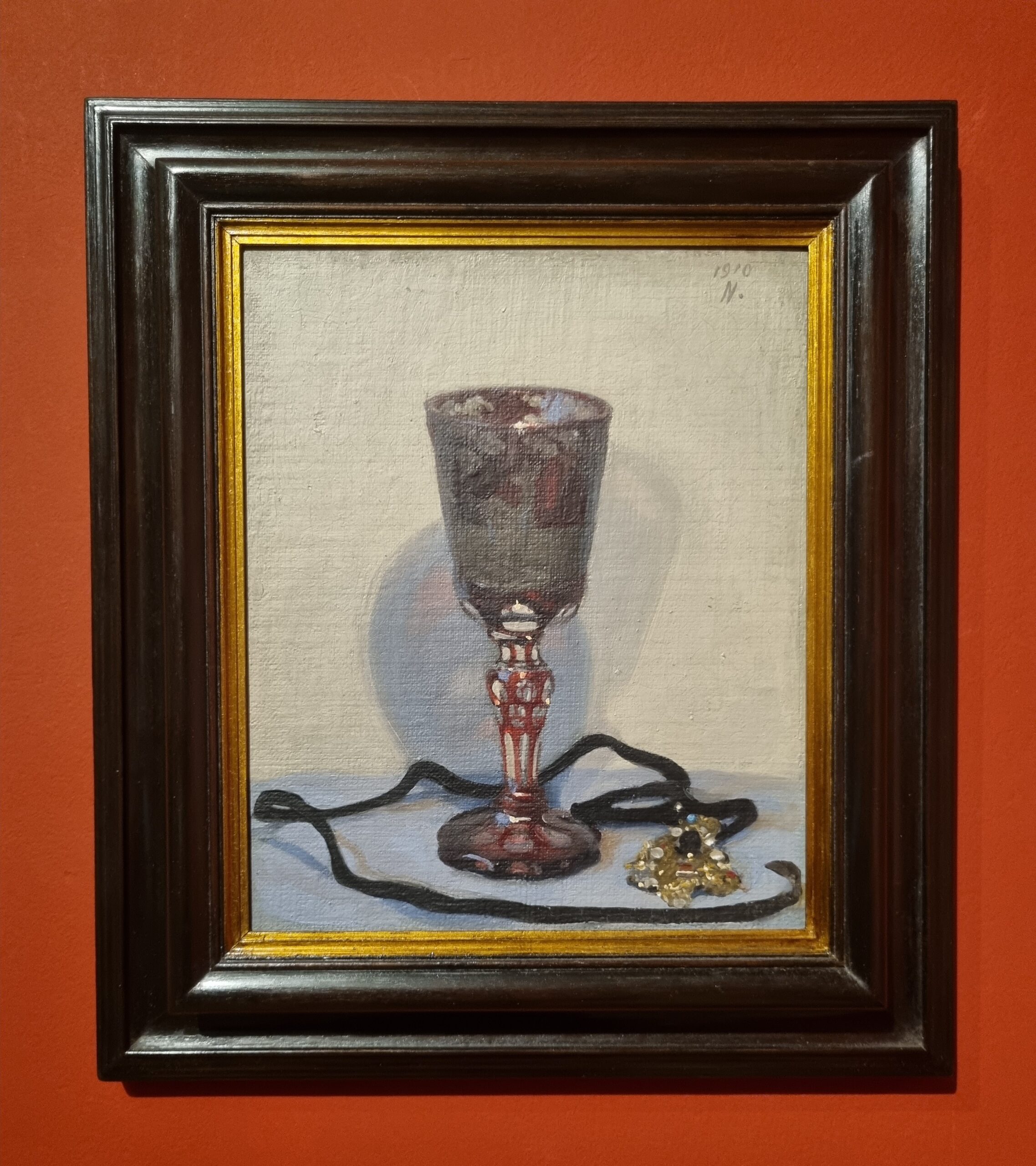
The Ruby Glass, 1910, oil on canvas board
The exhibition spans the entire creative career of Sir William Nicholson (1872-1949), exploring his distinctive talent for conveying beauty, colour, texture and detail, whilst also offering insights into his works and home life.
A rich cross-section of his oeuvre is compellingly presented, with informative captions, from engaging portraits; evocative landscapes; bold poster designs; his acclaimed woodcut print alphabet, published by William Heinemann; and delightfully playful book illustrations.
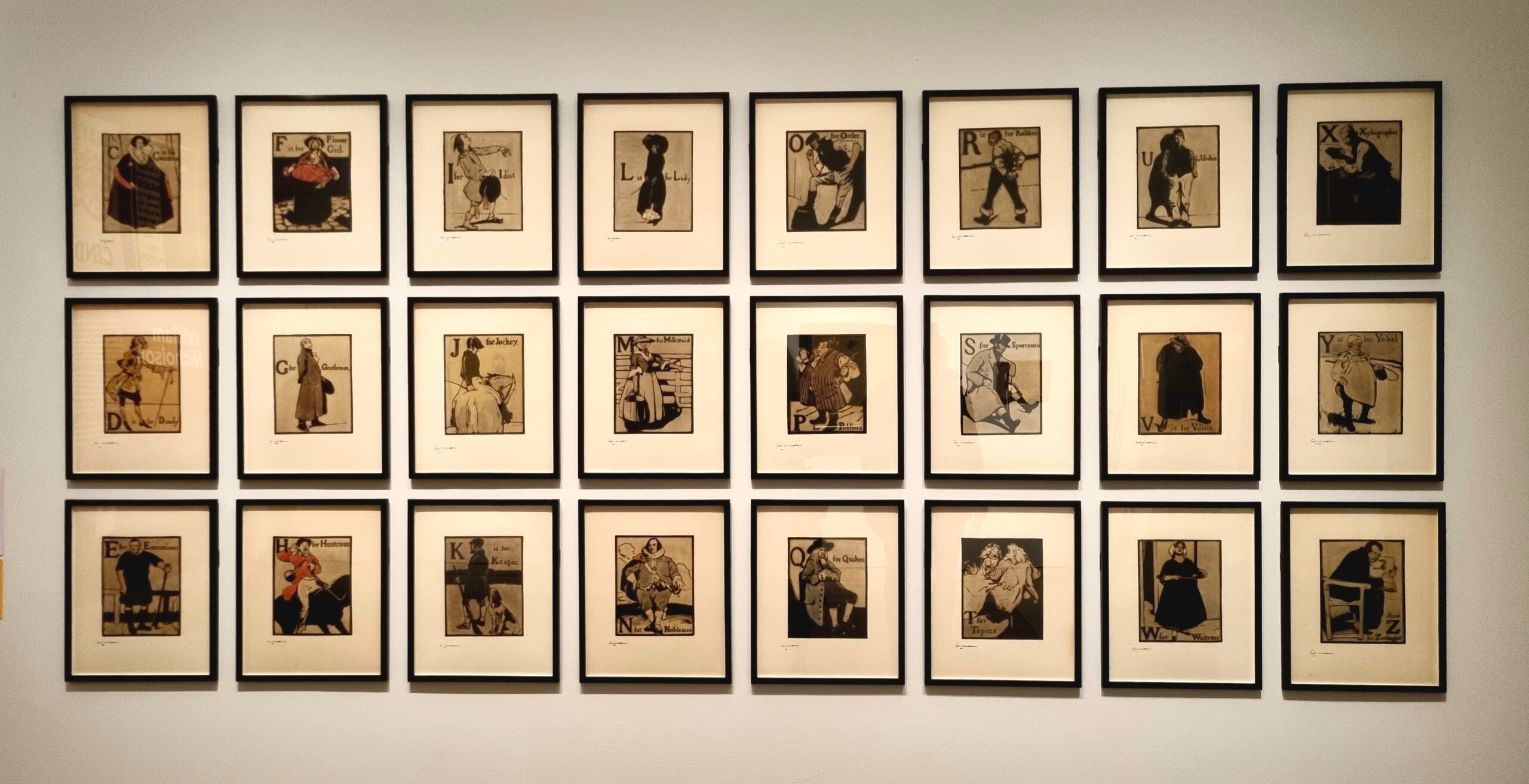
Part of William Nicholson’s woodcut alphabet published by William Heinemann in 1897
His poetic still lives feature large. Given Armadillo Central’s connections with silversmithing and goldsmithing, we were naturally drawn to those that depict metals, as well as iridescent lustreware and glass.
Gold Jug, on loan from His Majesty the King, is a standout, capturing the light on the vessel with such shimmering realism that it appears to be almost liquid. This essentially simple composition, which might well highlight a brass measure rather than the purported gold jug, is a striking vision.
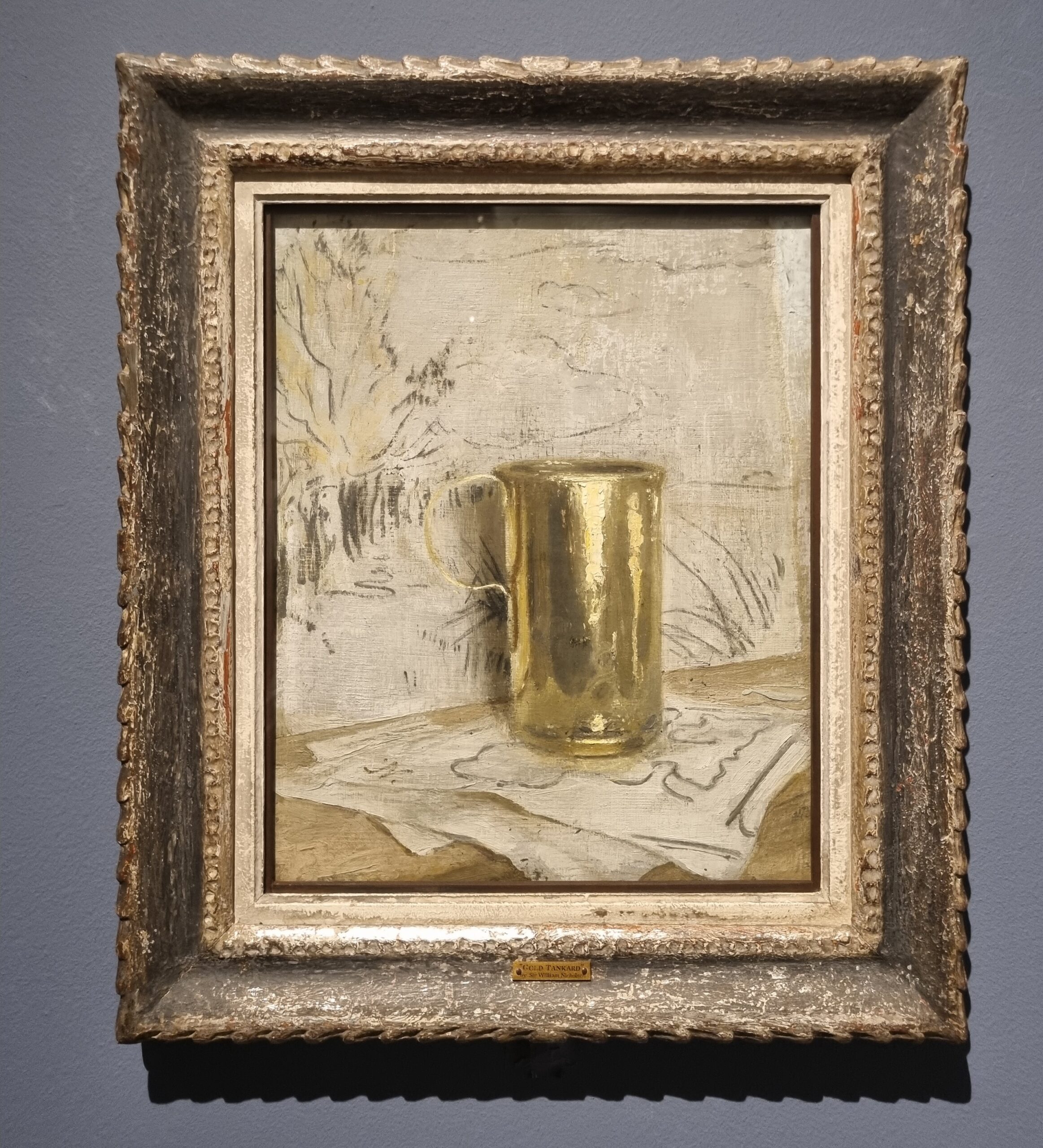
Gold Jug, 1937, oil on canvas board
It features on the cover of the gallery’s current magazine and across promotional material. It is no surprise that this scintillating artwork was acquired in 1942, for the royal collection by Queen Elizabeth, on the advice of Sir Kenneth Clark, Surveyor of the Kings Pictures.
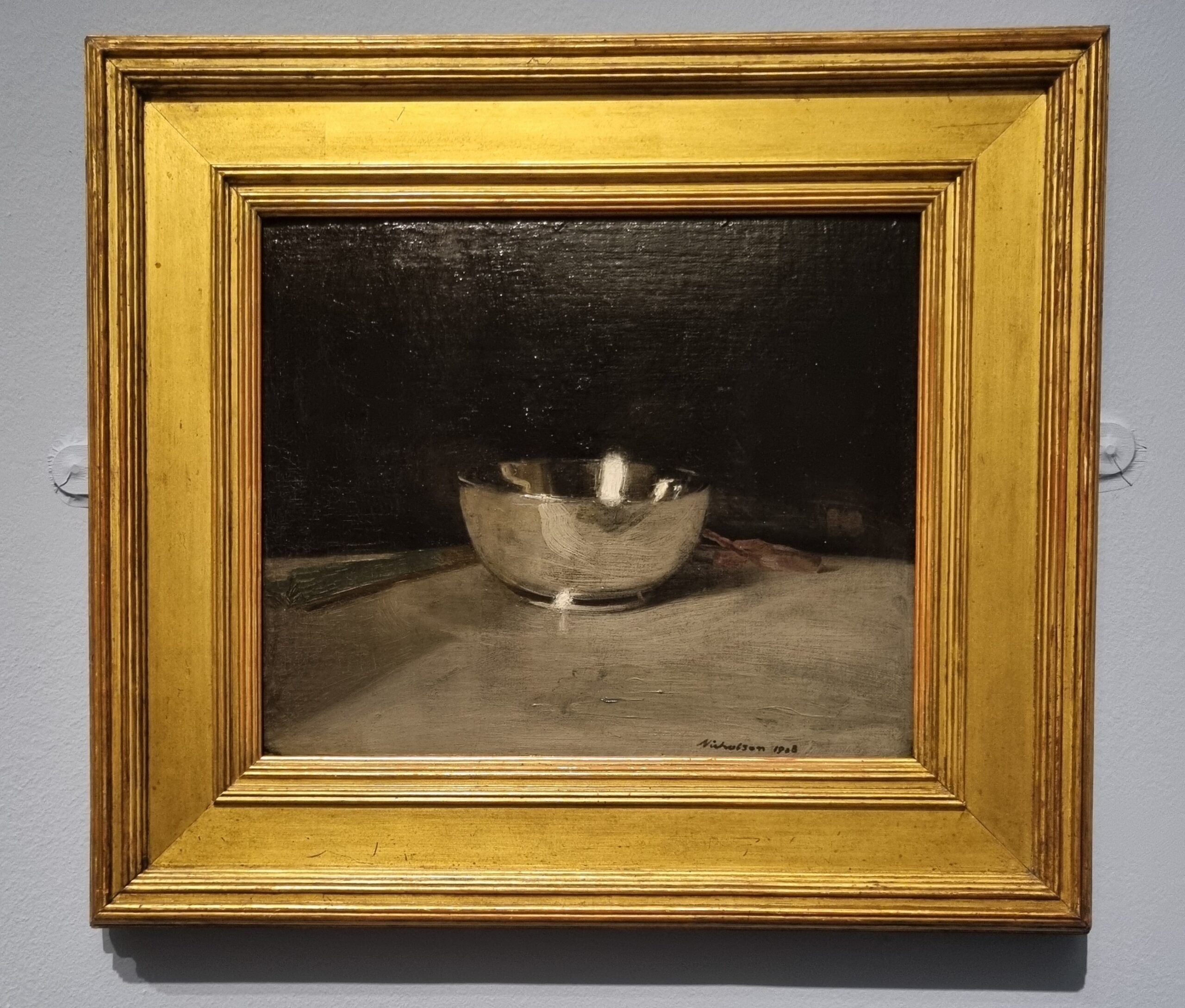
The Lustre Bowl, 1908, oil on canvas board
Nicholson’s masterful renditions of reflective materials, including items that he returns to in different settings, recur throughout the exhibition. It is particularly interesting to note the evolution of his creative approach, from a purer figurative style through to the borders of abstraction in later works, such as Silver, painted in 1938.
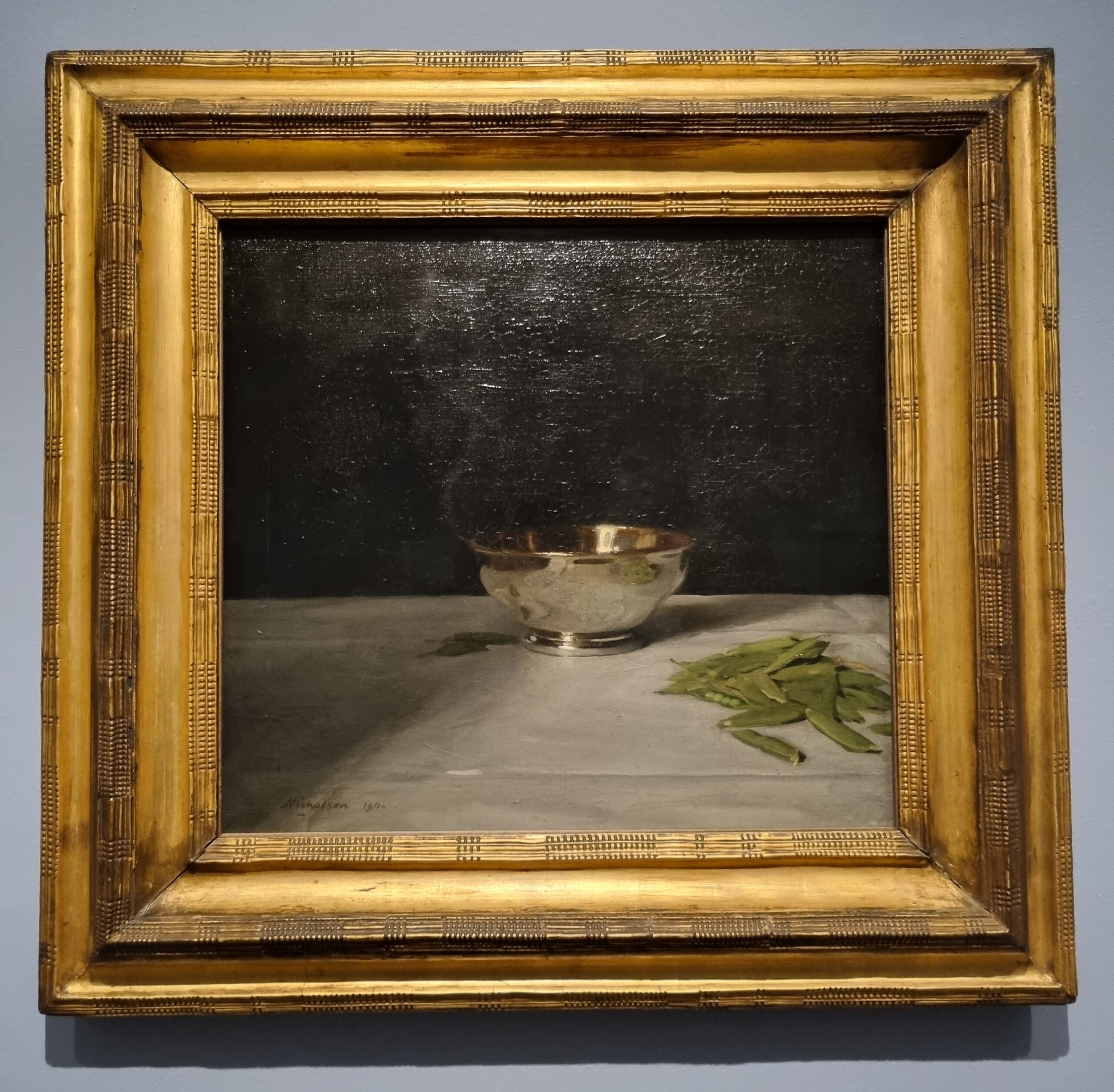
The Lustre Bowl with Peas, 1911, oil on canvas
The brilliance in execution never falters. On close observation, perfectly placed dashes of white oil – a colour or tone which is notoriously tricky to handle – convey the illuminated areas with remarkably incisive brushstrokes.
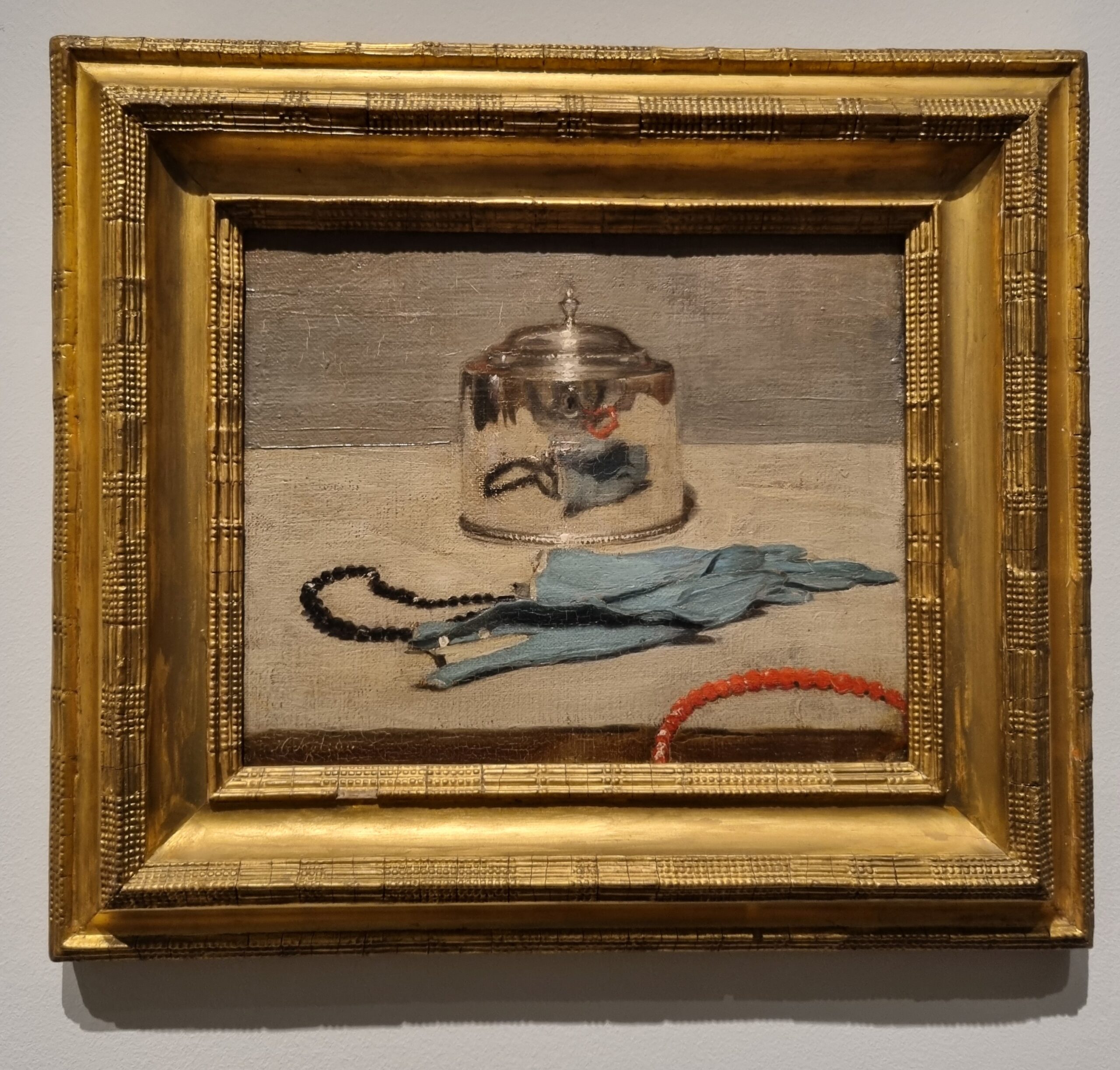
The Silver Casket, 1919, oil on canvas
Furthermore, the reverential way in which Nicholson represents familiar items in his studio, not just those made of precious materials, elevates their status beyond their inanimate presence. These are no longer mere objects, but singular items, each worthy of a meaningful portrait.
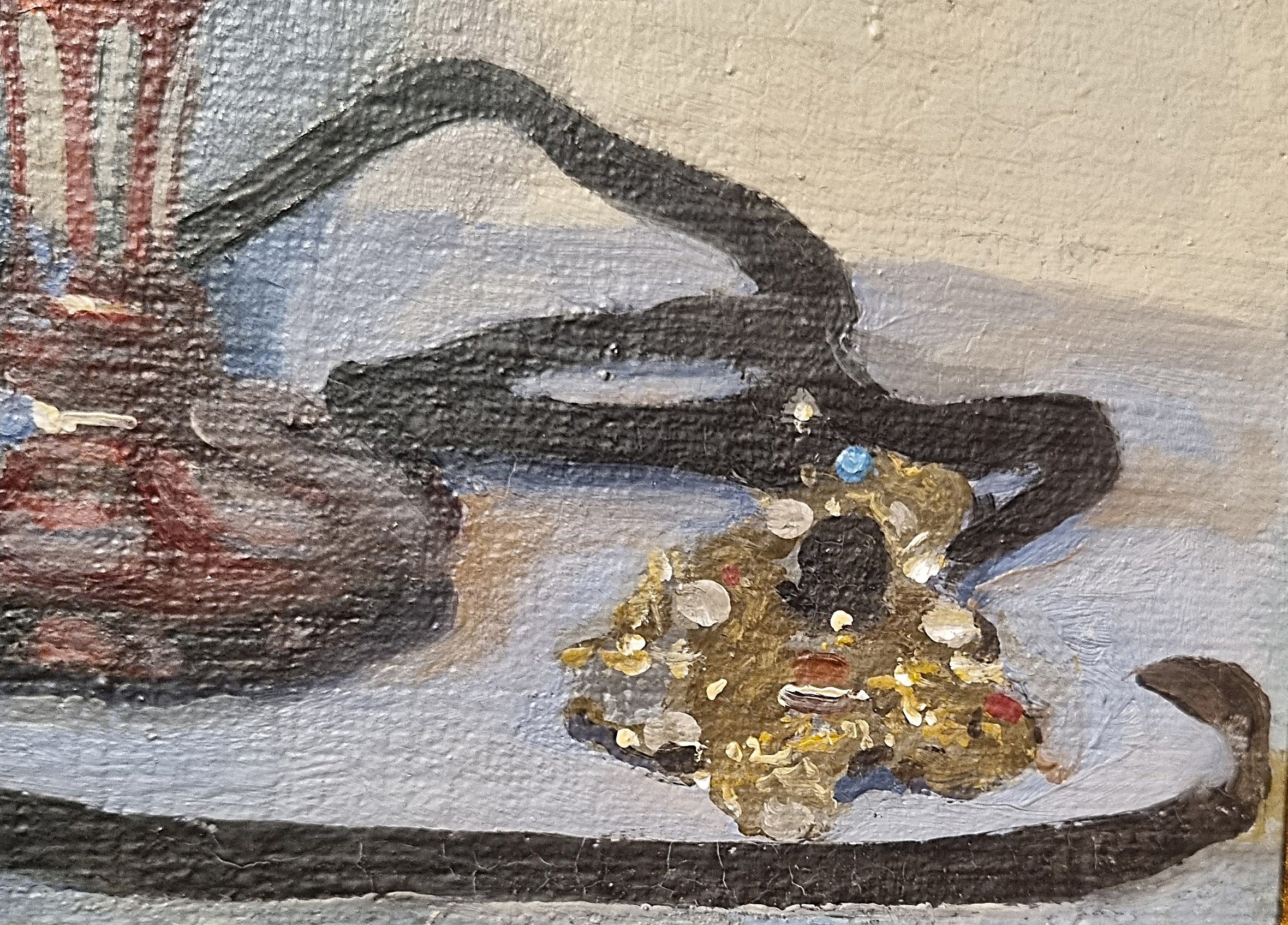
The Ruby Glass, 1910, oil on canvas board, detail of costume jewellery
Nicholson’s exquisite skill in depicting shiny surfaces, which is challenging in any medium, is explored through the muted shades of pewter through to multi-faceted mirror-like pieces of silver. The flowing dynamics of changing light in each of these works is captured to absolute perfection.
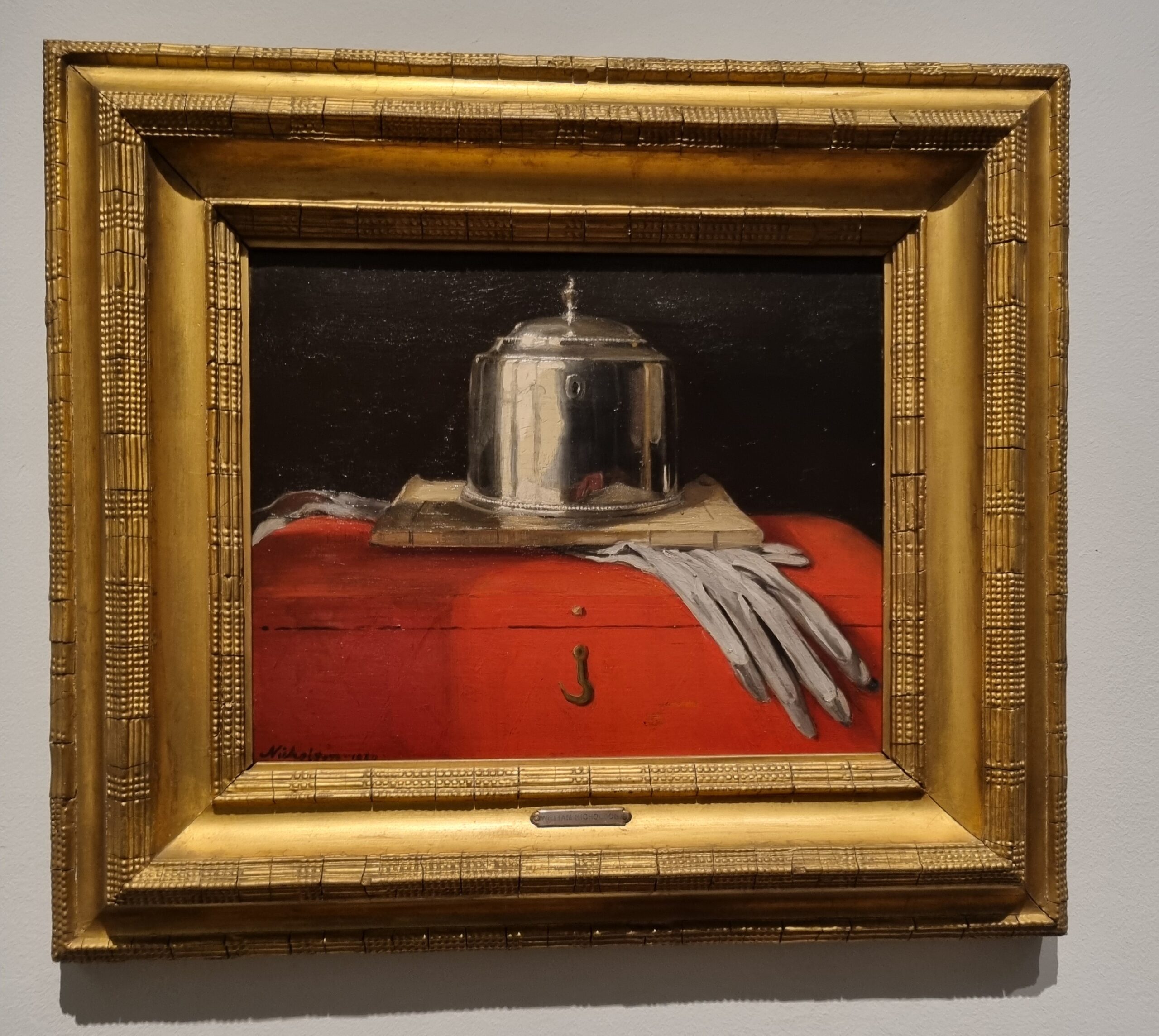
The Silver Casket and Red Leather Book, 1920, oil on panel
His talent extends to picking out other items that are reflected within the still lives, at times distorted by concave surfaces, such as the rounded form of a silver casket. We can make out gloves, jewellery, a window, the shadow of a curtain and perhaps even, the presence of the artist.
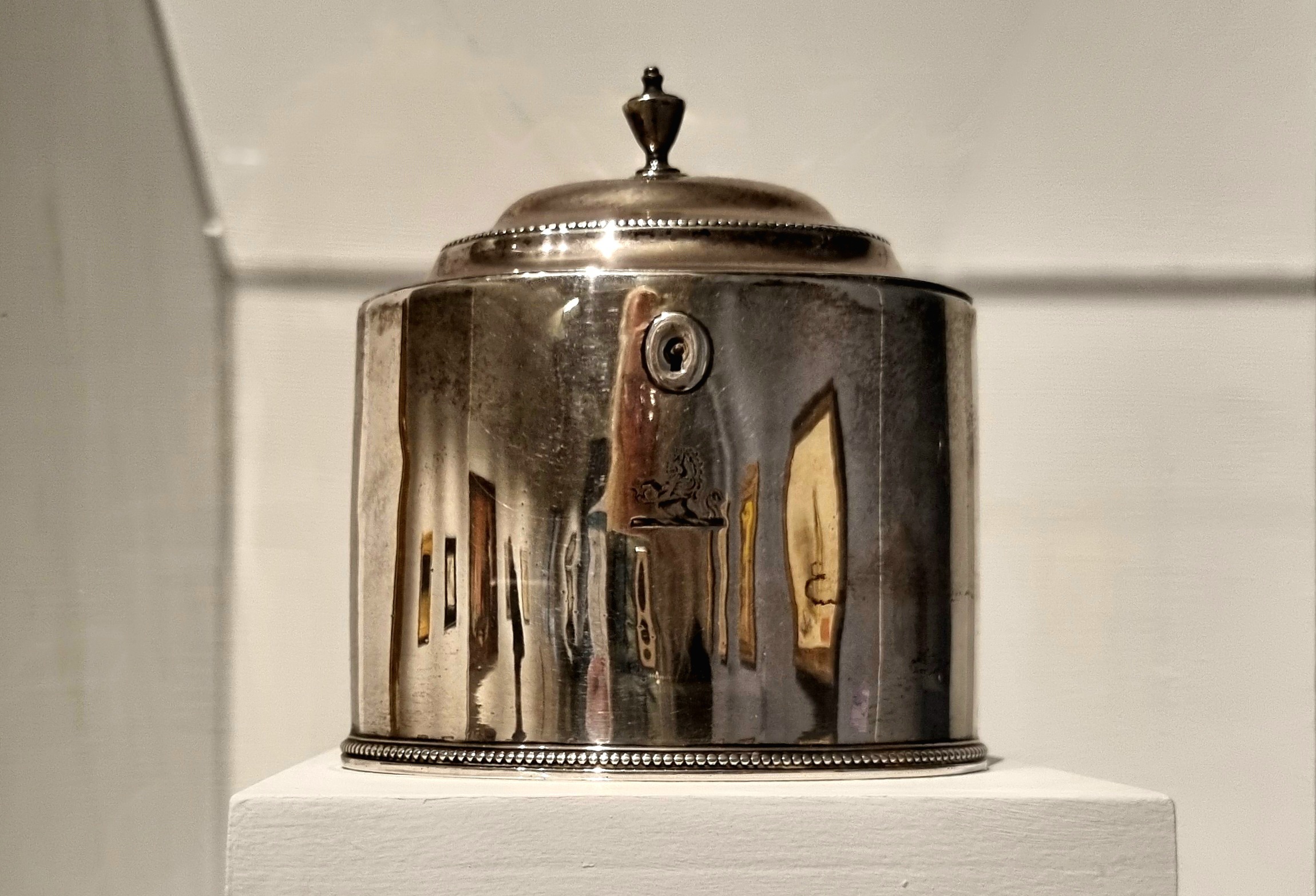
Silver Tea Caddy, by Hester Bateman, 1780
The casket, a silver tea caddy in fact, was created by Hester Bateman (1709-1794), known as the ‘Queen of English Silversmiths’. It appears in a number of paintings and belonged to Nicholson, who collected her work. On loan from his family, it is exciting to see it on display, alongside a couple of his glistening portrayals.
Painter, printmaker, designer and storyteller, ‘William Nicholson’ runs until May 10 at Pallant House Gallery in Chichester.
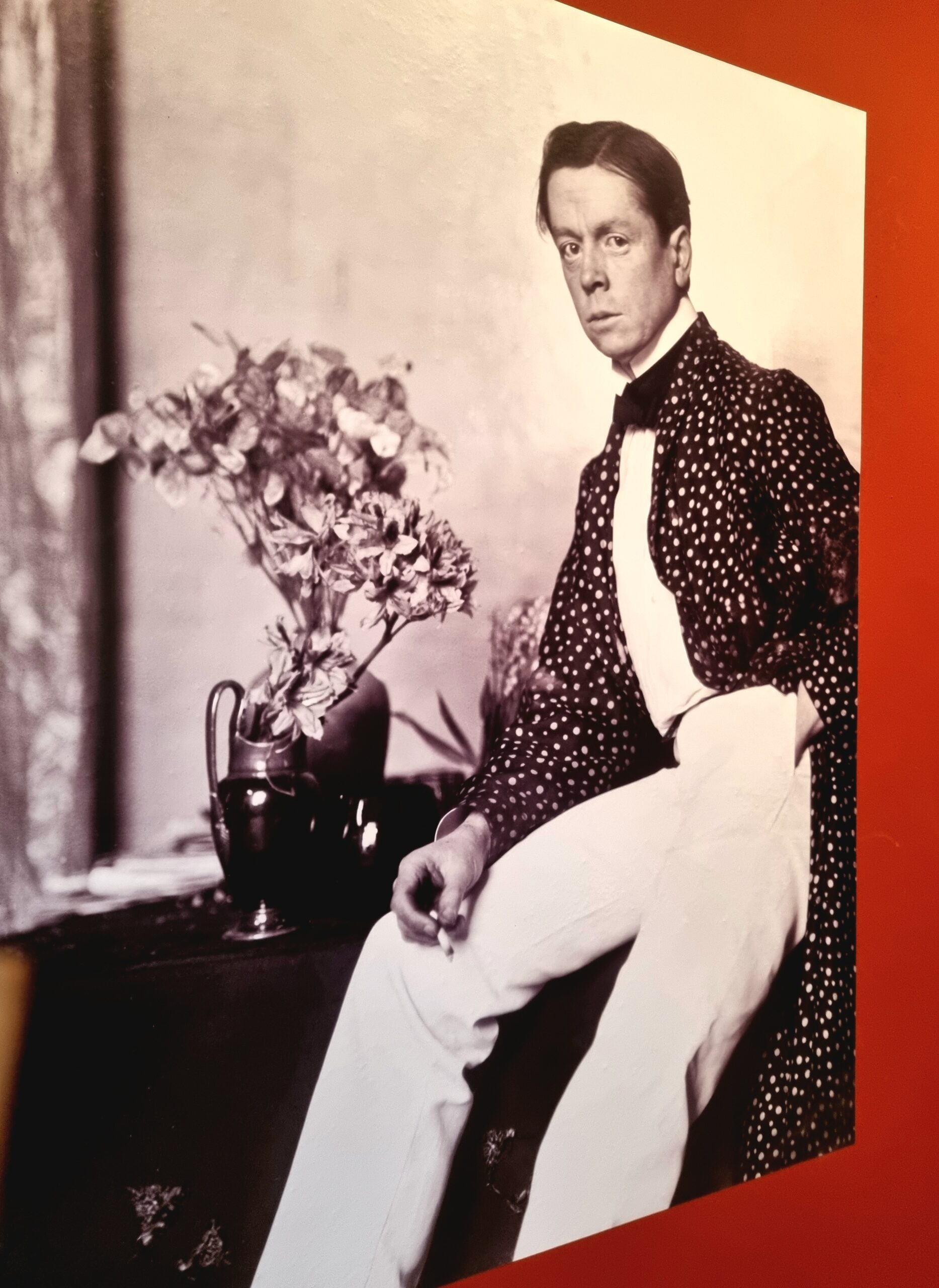
Sir William Newzam Prior Nicholson, undated and unattributed portrait – information welcome
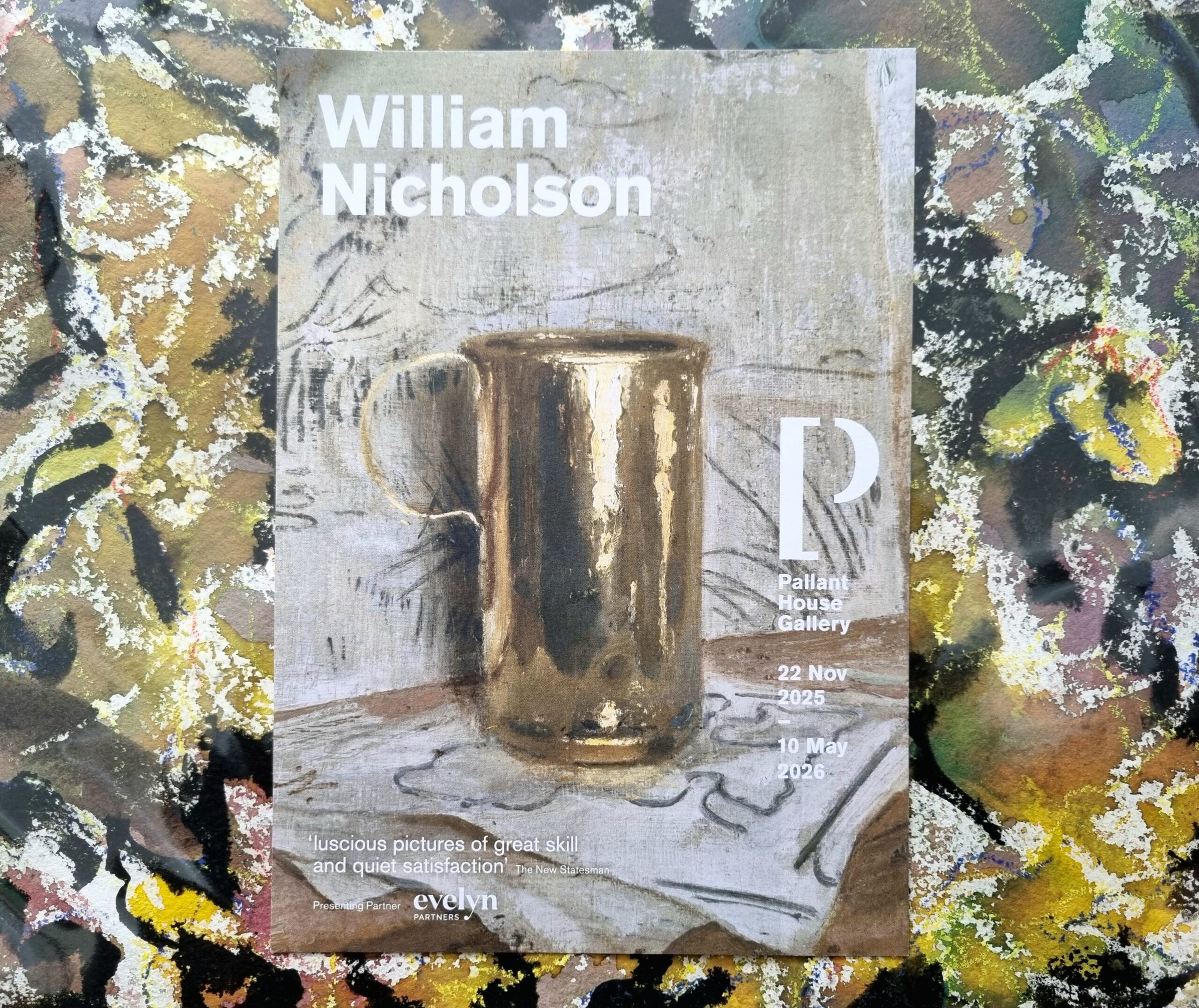
William Nicholson at Pallant House, Chichester, promotional flyer, with an abstract painting by Jennifer Copley-May in the background
Text and photography © Emma Boden for Armadillo Central, 2026